
Watt’s Up? Powering Smart Homes with Data
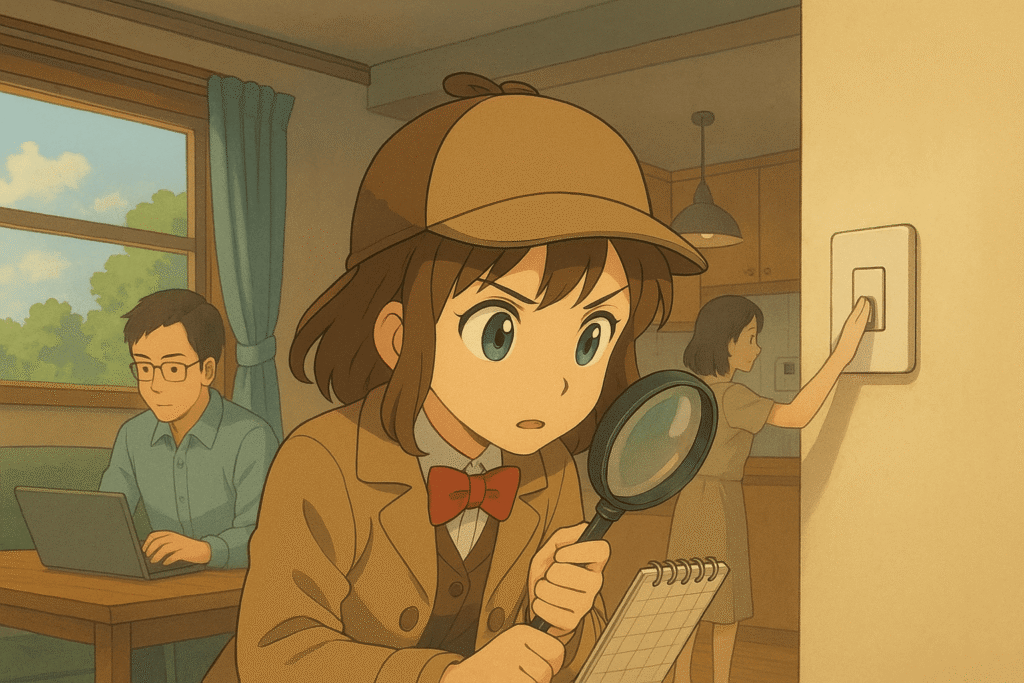
Every household uses energy—switching on lights, cooking meals, running gadgets—but most of us rarely ask: Where does it all go, and how can we save more?
In this project, students become household energy detectives, using real-life data like electricity bills, gas refills, or piped gas usage to track patterns and spot waste. They’ll design simple low-code apps or dashboards to help families budget better, cut costs, and optimize energy use.
Along the way, students connect their work to economics concepts like consumption, budgeting, and opportunity cost, while also advancing SDG 7 (Affordable and Clean Energy), SDG 12 (Responsible Consumption and Production), and SDG 13 (Climate Action).
The challenge is to turn everyday numbers into tools that make homes smarter, greener, and lighter on the wallet.
Clean Air at Home – Building Your Own Air Purifier
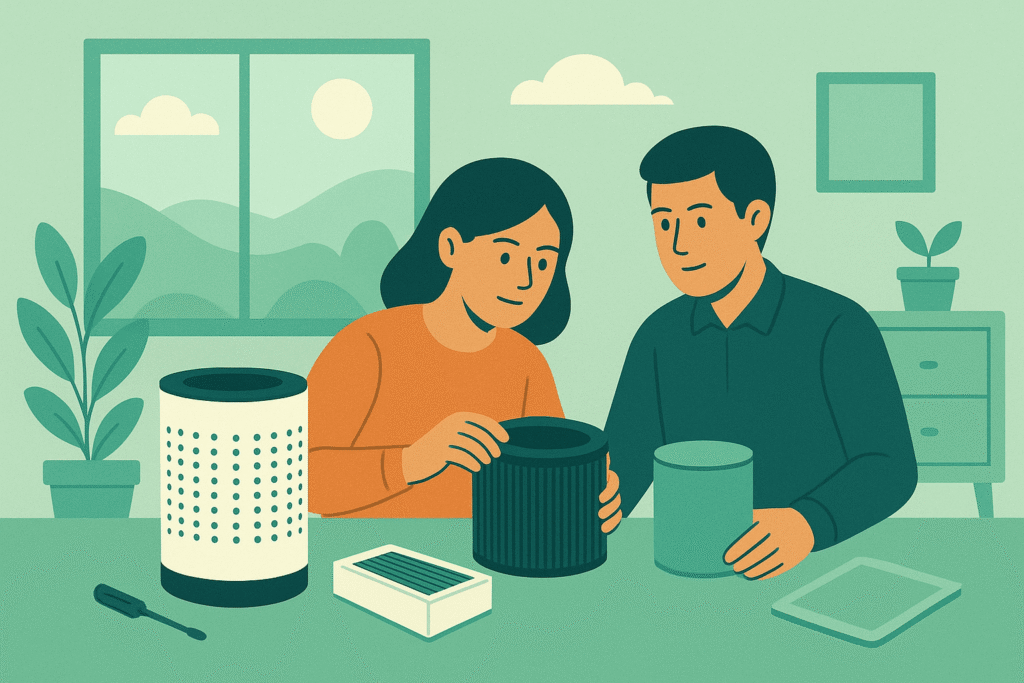
Imagine living in a city where the air is so polluted that stepping outside feels like breathing smoke. That’s what happened to Professor Thomas Talhelm in Beijing. Instead of buying a fancy $1,000 air purifier, he rolled up his sleeves and built his own for a fraction of the cost—and it worked!
In this project, you’ll follow in his footsteps. Your mission: design and build a low-cost air purifier that can actually clean the air in your room. You’ll discover how air purifiers work, why HEPA filters are so good at trapping tiny particles, and how to make air flow work in your favour. Then you’ll sketch your design, gather simple materials like a household fan and a filter, and start building.
Once your purifier is ready, it’s time to put it to the test. You’ll measure the air quality before and after running your machine, see if your design works, and think about how you could make it even better. By the end, you’ll realise you don’t need expensive gadgets to solve real problems—you just need curiosity, creativity, and the courage to try.
EcoEngineers – Designing Sustainable Green Spaces
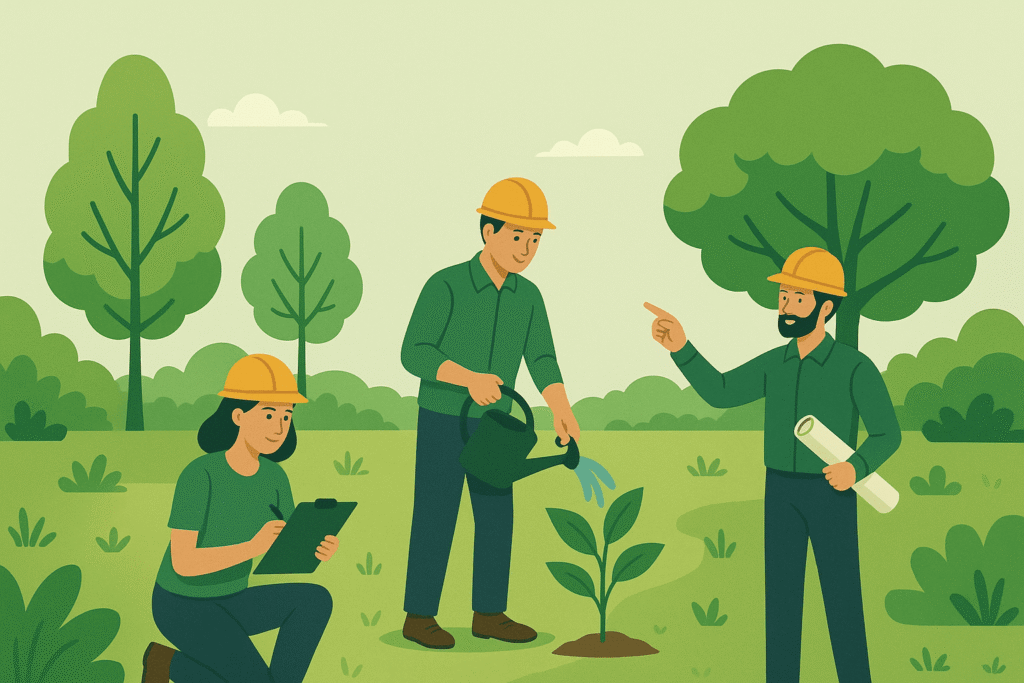
Look around your neighbourhood – between the busy roads and buildings, you’ll find little patches of green: parks, gardens, and urban forests. They give us fresh air, shade, and a home for birds, insects, and other creatures. But keeping these spaces alive isn’t always easy. Sometimes water is hard to get, sometimes people forget to care for them, and sometimes they just need a bit of creative engineering magic.
That’s where you come in. Your challenge? Design a clever, eco-friendly solution to help a green space in your neighborhood thrive. It could be a way to water plants, improve soil, collect rainwater, create shade, or even get the local community involved. You’ll explore ideas, sketch them out, and build a working prototype or scale model. Your design might use pedal power, cranks, sunlight, wind, or something completely unexpected—you decide!
In the project lecture, you will learn about and use first principles thinking – a way of breaking down problems to their basics so you can design better solutions. You’ll also learn about how water moves, how to work with the local environment, and how to think about all the people and resources involved.
Galaxies in Motion: Turning Space Images into Visual Stories

Have you ever looked at pictures of space and wondered what those bright colors and shapes really mean? In this creative project, you’ll work with real images of galaxies—huge collections of stars far beyond our own solar system—and learn how to turn what you see into your own visual art.
With guidance from Prof. Raja GuhaThakurta, an astrophysicist at UC Santa Cruz, you’ll explore how scientists study galaxies using powerful telescopes like Hubble and James Webb. You’ll look closely at the shapes, colors, and patterns in galaxy photos and learn what they tell us about space. Then, you’ll use those ideas to create your own artwork that shows what a galaxy looks like, how it moves, or what story it tells.
Here’s what you’ll create:
Visual Art Piece: A drawing, digital design, painting, collage, or mixed media piece based on a galaxy or space concept.
Story Behind the Art: A short explanation (300–500 words) of what the galaxy is, what inspired the design, and the science it’s connected to.
Space Art Showcase: Share your artwork and story with your school peer group in a space art showcase event at school!
Here’s what you’ll learn:
What galaxies are and how scientists study them using light and images.
How to recognize shapes, colors, and patterns in space and what they mean.
How to turn science ideas into creative visual stories.
How to talk about your ideas with others in a fun and confident way.
You don’t need to be a science expert or an artist to join—just bring your curiosity and creativity. This is your chance to explore space and tell your own story through art!
Harvesting Goodness: The Seeds to Plate Challenge
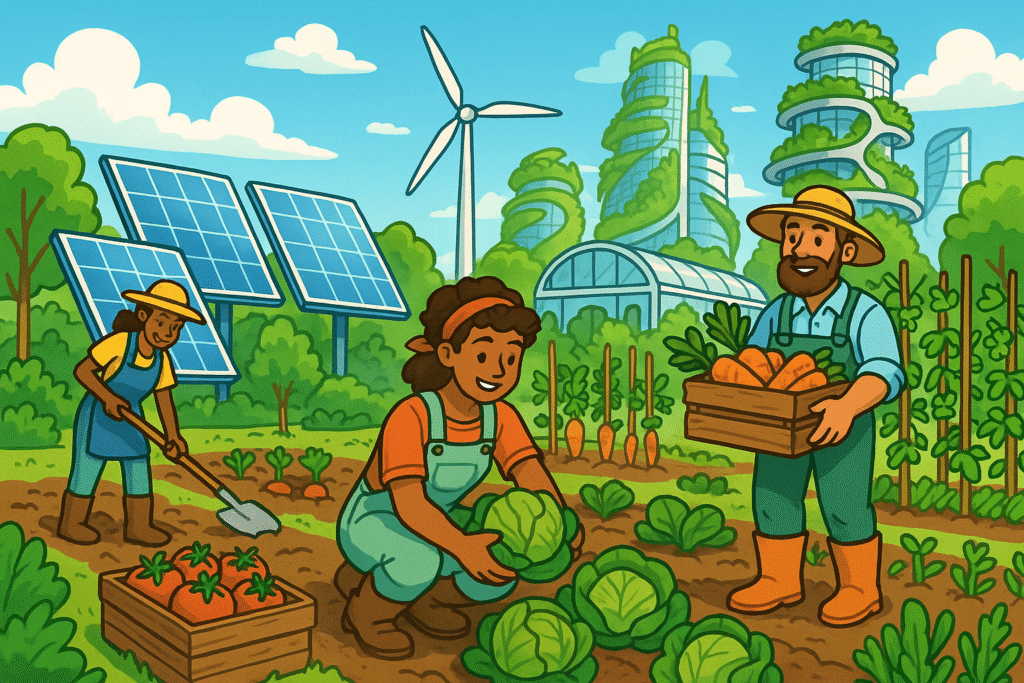
In this project, students will experience the full journey of growing their own food—from planting seeds to preparing a dish with what they’ve harvested. Working at home or in shared school spaces, students will choose fast-growing vegetables or herbs such as spinach, coriander, or microgreens, and grow them in simple containers using recycled materials. This project helps students reconnect with nature, learn where their food comes from, and see how even small green actions can make a difference.
As they plant, care for, and observe their crops, students will learn key science and life skills—understanding plant life cycles, practicing responsibility, and developing patience. They will keep a simple “Plant Journal” with drawings, notes, or photos to document their progress.
At harvest time, students will prepare a basic snack or meal using what they grew, then create a poster or short video to share their seed-to-plate journey with the world. Through this project, students build awareness of sustainability, healthy eating, and the power of growing their own food—even in small spaces.
Cities and Us: How Architecture Shapes Culture
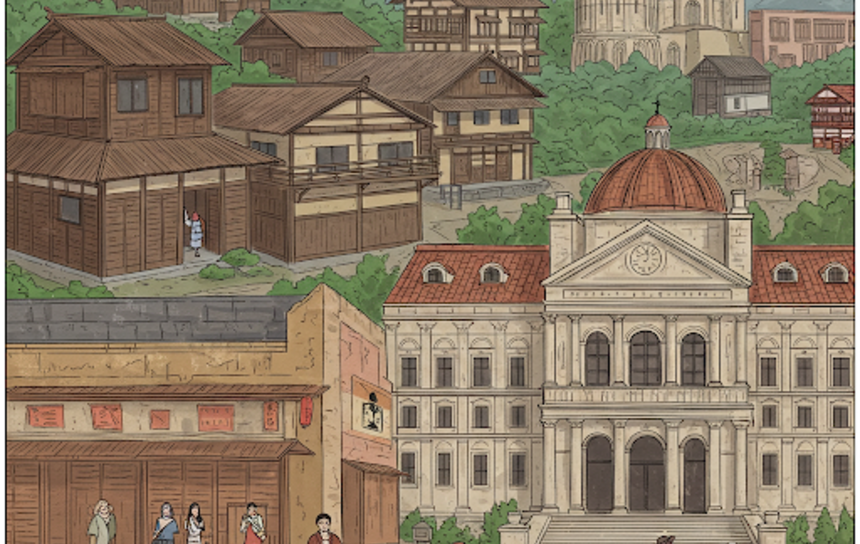
Cities are shaped by their built spaces, influencing how people live, work, and connect. However, urban structures are often designed without fully considering cultural identity, community needs, or sustainability. In this project, students will explore how architecture contributes to building better cities by reflecting history, social values, and functionality. Using research, ideation, and hands-on design, they will construct a model of an urban structure—such as a bridge, marketplace, or public square—that balances aesthetics, purpose, and cultural significance. Deliverables include a design of a physical model of the structure explaining its design choices. Through this project, students will develop creativity, problem-solving, teamwork, and an understanding of how architecture can make cities more livable and inclusive.
Guardian Bots: Building Assistive Robots for an Inclusive World
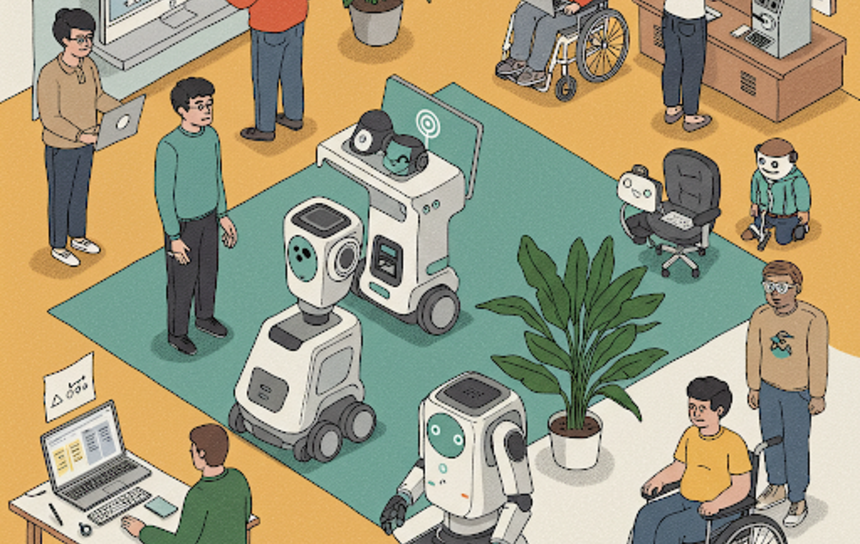
Millions of people with disabilities, visual impairments, or mobility challenges face daily obstacles in performing everyday tasks. Assistive technologies can enhance independence, safety, and accessibility, but innovative, low-cost solutions are needed. In this project, students will design a prototype of an assistive robot using recyclable materials, focusing on improving mobility, task assistance, or accessibility. They will apply human-centered design principles to create a functional, empathy-driven solution that addresses real-world needs. Through this hands-on challenge, students will develop creativity, problem-solving, teamwork, and STEM skills while exploring the role of robotics in building a more inclusive world.
Making Math Fun
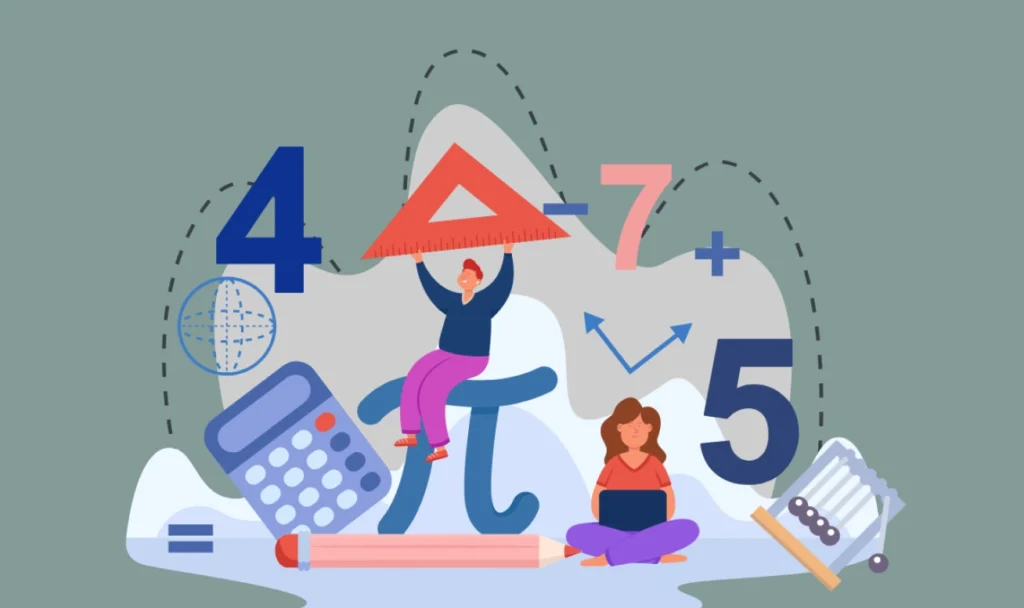
Mathematics is everywhere around you. Be it a bicycle, a search algorithm, or even the scenarios that we encounter in our day to day lives. Can we observe and uncover the mathematical principles animating these phenomena? And can we use these explorations to make learning maths fun? This project invites you to: 1. Pick one object or scenario around you that utilises a mathematical principle 2. Use the object or scenario to create a mathematical game, puzzle, or activity to teach the principle in a fun and accessible manner For instance, bicycles rely on angles and circular motion to achieve extraordinary efficiency and computer algorithms rely on statistical models, probability and logic. Similarly, the reality TV show called “Let’s Make a Deal” or “Khul Ja Sim Sim” (Indian version) popularised the “Monty Hall problem” as a probability-based brain teaser. In the show, you’re given the choice of three doors: Behind one door is a car; behind the others, goats. You pick a door, say No. 1, and the host, who knows what’s behind the doors, opens another door, say No. 3, which has a goat. He then says to you, “Do you want to pick door No. 2?” Is it to your advantage to switch your choice? Surprisingly, the principle of probabilistic reasoning leads us to the conclusion that switching the door improves your chances of winning the car. You can pick any such object or scenario and uncover the mathematical principle behind its design. The final output of your project will be to create a game, puzzle or activity that uses the object or scenario to teach the mathematical principle behind it. You can submit your game, puzzle, or activity in the form of a written document, a visual presentation, or a video. The best submissions will be the ones that make learning maths more fun and accessible using an object of everyday use
Public Health Response Platform

Students of Woodward High were sitting together enjoying being outdoors in the post-Covid world. They had been indoors for far too long. One of them asked a pertinent question. “We got vaccinated to fight against Covid. Children weren’t given the vaccinations. But aren’t vaccinations only for kids? I don’t see my parents visit a doctor annually to take any vaccinations.” This got them thinking. They wondered if the adults around them weren’t informed about vaccinations or are they missing something. Upon further research, they uncovered interesting information. Vaccines work by introducing a piece of a virus or bacteria into your body so you can develop long-lasting immunity to the pathogen. While the piece introduced by the vaccine rapidly fades away, your body’s immune system remembers what it saw. So children from ages 0 to 4 are administered most of the vaccines that scientists have developed to fight against well known diseases. However, most adults are either unaware or ignore recommended vaccinations for them. This puts them and people around them at high risk. Some adults travel to high risk countries without being properly vaccinated. For instance, did you know that parts of Africa recommend taking the Yellow fever vaccine? Others have weakened immune system and yet ignore taking a Tdap every 10 years. Tdap vaccine can prevent tetanus, diphtheria, and pertussis. Diphtheria and pertussis spread from person to person.Sometimes as new diseases are discovered and enter countries via traveling people, it is important to stay protected and healthy. This information is hardly passed on. The sharp students of Woodward High decided to take on the task of building a platform that will help inform adults about recommended vaccinations in their area, track if they are vaccinated, and assess the individual risk they pose to the world around them. All in the interest of public health. Your project is to assume the role of these students and build a low-tech platform that will help adults in your area and be easily scalable to other areas.
Creativity and Internet of Things
Years ago people lived in joint families. Multiple generations living together and depending on each other. So the young ones took care of the elderly and the cycle continued. But the world has moved from joint families to nuclear families. These small families often relocate to different continents while the elderly stay back in their hometown. This has increased anxiety among both – the young and elderly. The biggest source of discomfort comes from their inability to be there in case of emergencies and sudden need. This is where loT can come in handy. Let’s build a rapid response device that connects the elderly with all the partners who need to respond immediately, as well as alert their children who are located elsewhere.