
Crowdsourcing History: Social Media as a Historical Source?
The project invites students to explore the concept of crowdsourcing history through social media, where users contribute to the documentation and interpretation of historical events. Students will analyse the benefits of this approach, such as the democratisation of history, the inclusion of diverse perspectives, and the rapid dissemination of information. However, they will also consider the drawbacks, including the risk of inaccuracies, lack of scholarly rigour, and the potential for bias. As a final deliverable, students will pick one historical event that has been highlighted on social media in recent years and contrast the interpretation of the chosen event vis-a-vis traditional and social media sources. Are social media sources reliable in building a revisionist understanding of the chosen event? Or are they inaccurate and biased? The project aims to equip students with understanding historical sources, avoiding misinformation on social media, and appreciating the intermingling of history with modern technology and politics.
Oceans in Our Lives: Exploring Connections through Everyday Objects and Stories
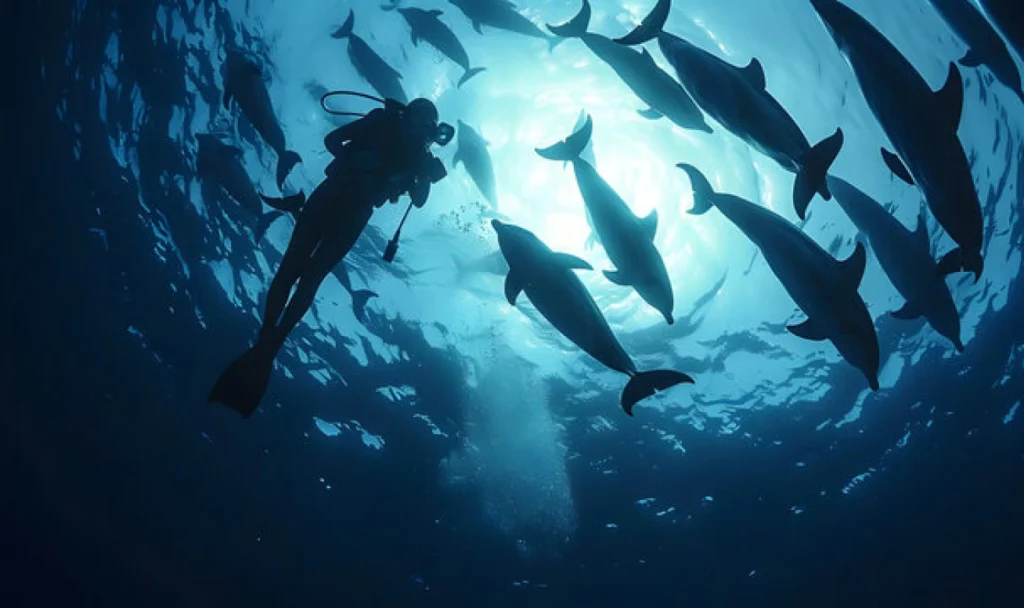
In this project, students will explore the hidden connections between their daily lives and the world’s oceans. Through the lens of history, literature, and social sciences, they will trace the origins and journeys of everyday objects, food, or cultural practices that have crossed oceans to reach them. By doing so, they will uncover stories of movement, trade, and cultural exchange that have shaped the modern world. Through the project, the students will gain an understanding of how oceans connect people, goods, and ideas across time and space. They will appreciate the role of the ocean in shaping their lives in surprising and meaningful ways, fostering a renewed sense of connection with the world’s oceans and their place in their lives.
Comprehensive Waste Management
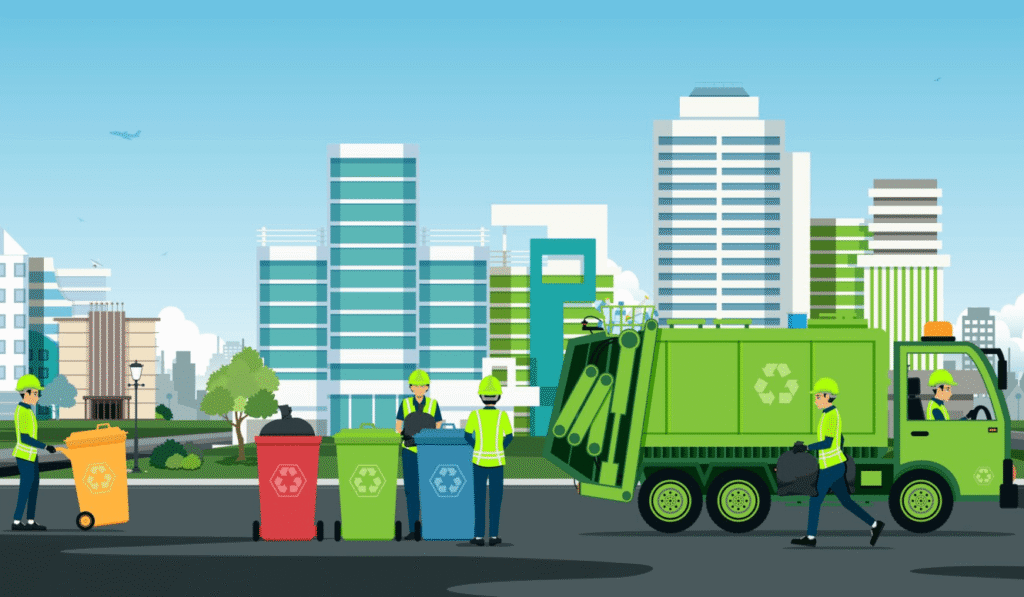
How can we design a comprehensive waste management system that optimizes segregation, treatment, reuse, recycling and disposal of dry and wet waste at household, community and national levels? Students will explore innovative strategies for effective waste segregation, develop treatment methods to minimize environmental impact and propose systems for maximizing reuse and recycling. By analyzing existing practices and identifying innovative areas for improvement, the project will offer actionable solutions to enhance India’s waste management processes. The project will nudge students towards exploring novel and innovative ways to address the unique challenges of their own cities and neighbourhoods.
Fostering Global Citizenship through Intercultural Exchanges
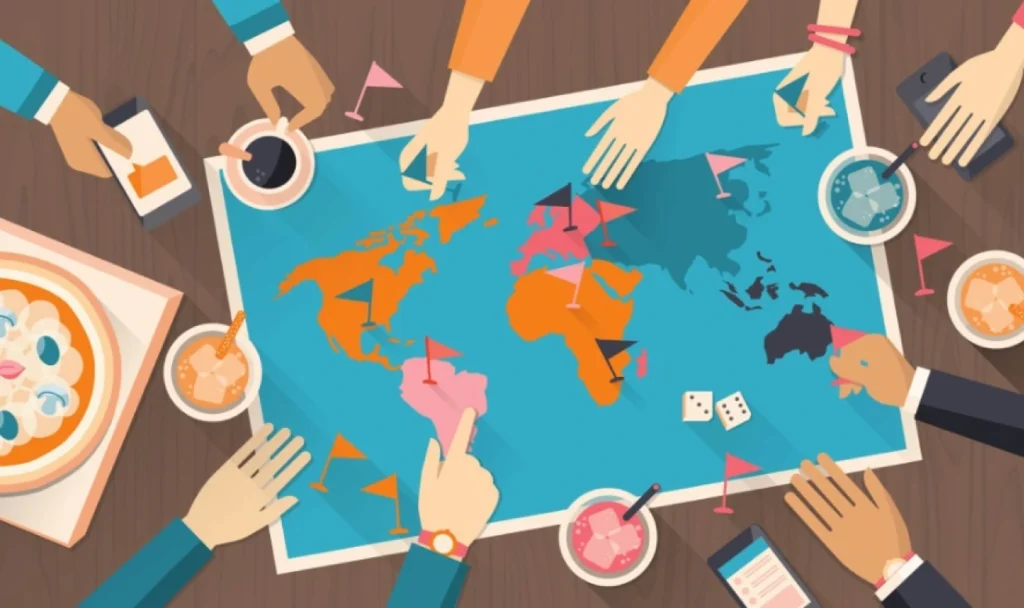
In this project, students will explore how Intercultural Exchanges Foster Global Citizenship. Students will select one partner country and delve into its culture, values, traditions and perspectives. Through this focused study, they will learn how engaging with another culture can promote mutual respect and global understanding. The final task will be to design a School-Based Intercultural Event centred on the chosen country. Students will collaborate with classmates to propose activities, presentations and displays that showcase the partner country’s culture and values. Students are encouraged to find common ground with the partner country’s culture to highlight shared human experiences. Finally, students will present an event plan to inspire the school community to embrace cultural diversity and inclusivity, demonstrating how such exchanges contribute to global citizenship.
Creativity and Design Thinking – Build an Inclusive Classroom
Let’s do a quick exercise. Imagine you are in your school’s classroom. Look around. Notice the blackboard, noticeboards, windows, tables and chairs. Do the windows have curtains? Are there plants? Is there a smartboard? Are all students from the front to back able to hear the teacher? Are the chairs comfortable enough? Does the current seating style help to create projects together? These are few of the many questions that aid in creating an inclusive classroom. Until age 18, we spend most of our waking hours in a classroom. Within these four walls we are taught everything. From mysteries of the universe, to our glorious past, cultures of different people and so much more. This room will quietly watch us grow into capable individuals ready to do great things. But is this classroom environment designed for learning? An inclusive classroom is designed to welcome all types of learners, lends itself to differentiated instruction and sets the stage for student success. An inclusive classroom isn’t designed just for average students. It’s designed to be universally accommodating for any student. So let’s put on our creative thinking hats and create the best environment. Let’s get started. Good luck!
Improve & Promote a Traffic Awareness/Management App/Campaign on Awareness
Traffic management and efficient relay of information in time to manage traffic remains a challenging task. But what if you can use people who are on the roads to provide real time information that can be used to help manage traffic better? For instance, if we know that an ambulance is on the way behind us, we could be forewarned and avoid that route altogether or plan ahead to move out of the way for the ambulance. What would such a socially responsible traffic management app look like? What other features are needed? Your problem statement here is to suggest design and features needed for the traffic app as well clearly explaining the benefits. A secondary task is also to create awareness for this app. How would you go about advocating its use?
Tourism Development in India
India is the seventh largest country in the world. While most other countries boast of either lakes or forests, snow or mountains, desert or city, India has it all. With very diverse cultures, food, art and beautiful topography, this country is a tourist’s dream. Yet, so many places in this country remain unexplored. What if you had the power to change one such place? What if you could completely alter one location to become a tourist magnet? Let’s get started.
The History of Geography
Ritu is travelling to Bombay for the first time. She is accompanied by her parents who are taking her to places she heard about growing up – the Gateway of India, Ajanta and Ellora caves, Marine Drive, and Juhu Chowpaty. After a couple of days, she gets tired of the usual sightseeing. She wonders how fun it would be if she had a local friend who could take her to the hidden treasures of Bombay. What if she could eat her friend’s favourite vada pav? Or visit a peaceful beach? Or explore a hippy neighbourhood with graffiti art?Why should travel for teenagers be dictated by adults? Why can’t teenagers explore their own or other cities through itineraries curated by their peers? Your task in this project is to assume the role of a travel curator and showcase your city to your teenage peers in the most fun way possible. Curate an itinerary or travel experience that includes places of interest in your city or neighbourhood. These can include street food vendors, sports corners, student hangouts or any fun spots. The best projects would pick one theme such as food, sports, or entertainment, and curate a unique travel experience highlighting the history and diversity of your city or neighbourhood. Your final output can take the form of a video game (Pokemon Go style), a 3D model, an interactive map, a treasure hunt, or any other creative format.