
Energy Management (STEM)
Our schools and homes spend a significant amount on energy, and we want to understand where and how we can achieve sustainable reductions. Your mission in this project is to become a team of Energy Detectives! You will use data analysis to reveal the hidden patterns in your school/home’s energy consumption and develop actionable plans to save energy and money. This project is your chance to become heroes for the environment. Be creative, be curious, and most importantly, be data-driven!
CRISPR for Gene Editing
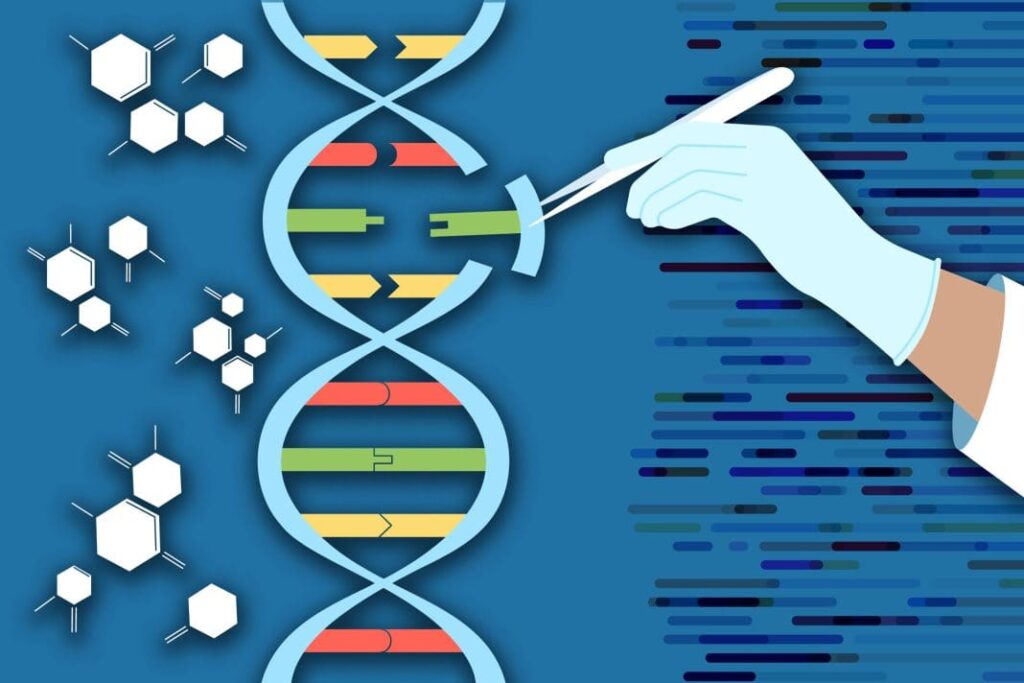
Humans are affected by about 7,000 known diseases which are caused due to mutations in our genomes. Gene editing is a cutting edge technology that allows us to make changes to our genome and prevent some of these diseases from affecting us. This project invites you to explore the world of gene editing to solve the problem of genetic disorders in a fun and experiential manner. Students will acquire a basic understanding of the human genome, genetic diseases like sickle cell disease and Huntington’s disease, and gene editing as a solution to such diseases. You will work with a genetic database to get hands-on experience of finding and designing gene editing interventions to cure diseases. Hence, your final output will be a solution to a particular genetic disorder using gene editing technology
Machine Learning for Autism
Did you know that 1 in every 100 kids in this world is diagnosed with autism? And this number is on the rise. Depending on severity of their diagnosis, these children have difficulty in performing regular tasks. They are also highly sensitive and find it very difficult to express emotion. Imagine a child of your age wanting to express themselves, but not being able to do so. What if you could help make things better with technology? Let’s take a trip into the world of machine learning. Machine learning (ML) is a type of artificial intelligence (AI) that allows software applications to become more accurate at predicting outcomes without being explicitly programmed to do so. What sorcery is this?! If you are wondering about the machine uprising, fear not. Man over many years has built Machine learning algorithms which use historical data as input to predict new output values. For your project, let’s build a machine learning algorithm to help people who are autistic to express themselves to others. Imagine you have an autistic friend named Jay. You might go up to Jay and tell him that you really like his new dress. Jay might want to show you that he is happy with your nice comment but can’t. Your machine learning program will come in handy here which will predict Jay’s response to your comment and show you what he wants to say. The response can be interesting faces with expressions or even funny memes! Similarly when someone is being mean, the response can be triggered by your machine learning program. Let’s get started and help Jay!
Making Museums More Engaging
Travel in any country and especially in India is incomplete without a visit to the museum. Conventional museums often have a similar structure with exhibits and a brief explanation of it which sometimes fail to attract the interest of today’s generation. However, there are many museums with unique ideas. Take for example the Kite Museum in Ahmedabad or the RBI Monetary Museum in Mumbai. Both these museums have exhibits but are not interactive in nature. Your task is to understand what kind of information is shared in both these museums and figure out how it can be made more interesting by cleverly making use of technology to provide interactive learning and fun experiences. If you want to pick another museum you can go ahead and do that.
Creativity and Design Thinking – Build an Inclusive Classroom

Let’s do a quick exercise. Imagine you are in your school’s classroom. Look around. Notice the blackboard, noticeboards, windows, tables and chairs. Do the windows have curtains? Are there plants? Is there a smartboard? Are all students from the front to back able to hear the teacher? Are the chairs comfortable enough? Does the current seating style help to create projects together? These are few of the many questions that aid in creating an inclusive classroom. Until age 18, we spend most of our waking hours in a classroom. Within these four walls we are taught everything. From mysteries of the universe, to our glorious past, cultures of different people and so much more. This room will quietly watch us grow into capable individuals ready to do great things. But is this classroom environment designed for learning? An inclusive classroom is designed to welcome all types of learners, lends itself to differentiated instruction and sets the stage for student success. An inclusive classroom isn’t designed just for average students. It’s designed to be universally accommodating for any student. So let’s put on our creative thinking hats and create the best environment. Let’s get started. Good luck!
The Smarter Paan-wala: Building Local Knowledge Banks
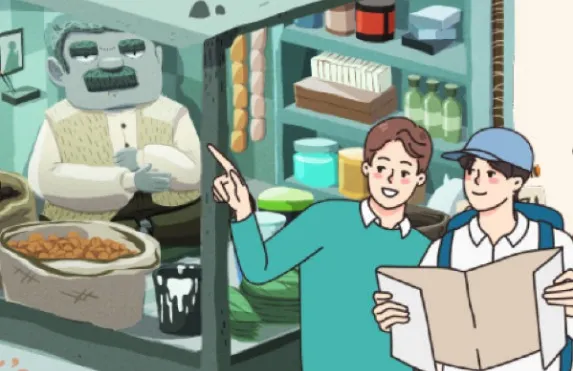
A decade or two ago, the corner paan/ vegetable shop used to be the go-to person for local information. We can even say that they are the local knowledge banks throughout the country. Over the last decade, Google Maps, Whatsapp location sharing, and other advances in technology have seen a shift from reliance on corner shops. However, there are things still lost in translation and differences in language, accent, and other personal preferences make it harder to communicate certain information in absolute terms (crystal clear manner). We would like to explore solutions to this problem that are based on technology and/or social engineering. The project invites students to engage with their neighbourhood in a fun and quirky manner and find a way for the local shops (paan shop, tea shop or any other vendors) to become repositories of local information/ stories/ anecdotes/ legends. It also invites students to think of technologies that can be used to build these local knowledge banks. The final output that the students will present will be a solution (either a product such as a digital app/or a service) that will help the local vendors and visitors to the neighbourhood exchange information reliably and enjoyably.
Creative Tech for Human Health
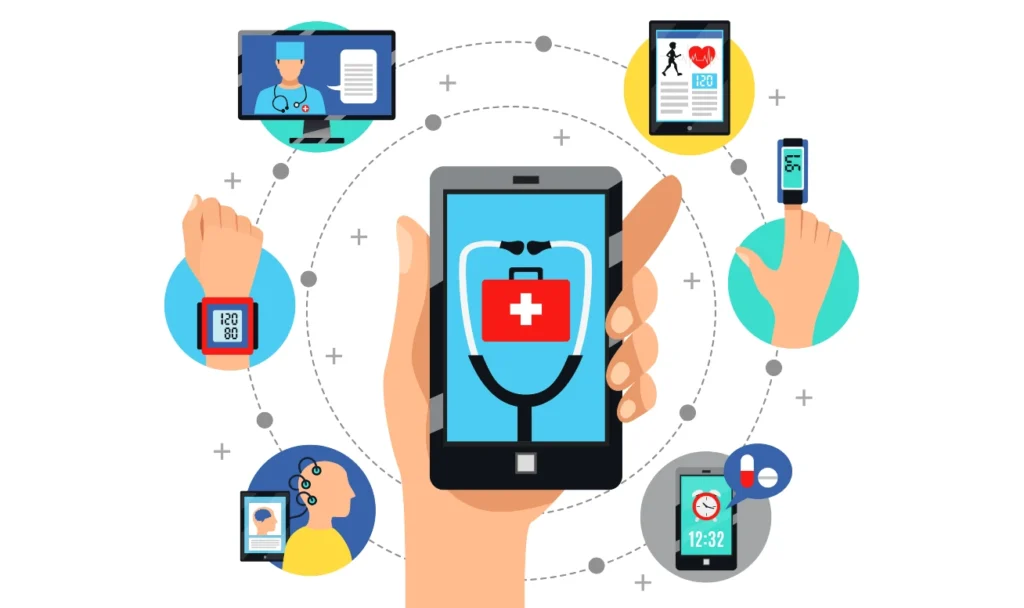
Did you know that the Japanese are known to live the longest? The secret of their long life is the concept of ‘Ikigai.’ The Ikigai way of life is especially popular in Okinawa (a city in Japan), known as the ‘Land of Immortals’. They have one of the longest lifespans and the highest rates of centenarians in the world. Okinawans treasure community and forge close bonds with their neighbors. They believe that having a purpose is essential for life fulfillment and that you can find joy and purpose in many aspects of your life such as helping others, eating well, and being surrounded by loving friends and family. They don’t even have a word for retirement and prefer to keep active well into later life, rather than ‘retire’ and stop all work completely. We live in a very hectic world with too many things to do and very little time to take care of ourselves. What if we could use technology to learn to be more like the Okinawans? The intent is to create a sense of balance between our body, mind and soul. Whether we want to achieve good mental health or lose weight or build better relationships, this app should be able to help us achieve our individual goals. Let’s build an app to help us move into a healthier future.
Improve & Promote a Traffic Awareness/Management App/Campaign on Awareness
Traffic management and efficient relay of information in time to manage traffic remains a challenging task. But what if you can use people who are on the roads to provide real time information that can be used to help manage traffic better? For instance, if we know that an ambulance is on the way behind us, we could be forewarned and avoid that route altogether or plan ahead to move out of the way for the ambulance. What would such a socially responsible traffic management app look like? What other features are needed? Your problem statement here is to suggest design and features needed for the traffic app as well clearly explaining the benefits. A secondary task is also to create awareness for this app. How would you go about advocating its use?
Tourism Development in India

India is the seventh largest country in the world. While most other countries boast of either lakes or forests, snow or mountains, desert or city, India has it all. With very diverse cultures, food, art and beautiful topography, this country is a tourist’s dream. Yet, so many places in this country remain unexplored. What if you had the power to change one such place? What if you could completely alter one location to become a tourist magnet? Let’s get started.
The History of Geography
Ritu is travelling to Bombay for the first time. She is accompanied by her parents who are taking her to places she heard about growing up – the Gateway of India, Ajanta and Ellora caves, Marine Drive, and Juhu Chowpaty. After a couple of days, she gets tired of the usual sightseeing. She wonders how fun it would be if she had a local friend who could take her to the hidden treasures of Bombay. What if she could eat her friend’s favourite vada pav? Or visit a peaceful beach? Or explore a hippy neighbourhood with graffiti art?Why should travel for teenagers be dictated by adults? Why can’t teenagers explore their own or other cities through itineraries curated by their peers? Your task in this project is to assume the role of a travel curator and showcase your city to your teenage peers in the most fun way possible. Curate an itinerary or travel experience that includes places of interest in your city or neighbourhood. These can include street food vendors, sports corners, student hangouts or any fun spots. The best projects would pick one theme such as food, sports, or entertainment, and curate a unique travel experience highlighting the history and diversity of your city or neighbourhood. Your final output can take the form of a video game (Pokemon Go style), a 3D model, an interactive map, a treasure hunt, or any other creative format.