
Automating the Retail Shopping Experience
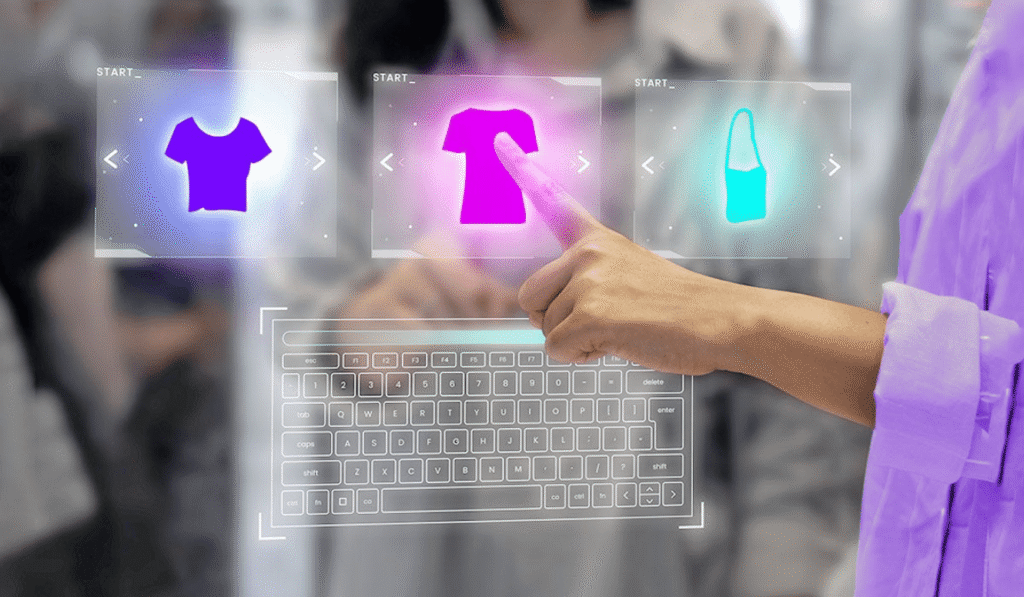
How can end-to-end automation revolutionize the retail shopping experience? Students will investigate ways to integrate automated technologies such as robotics, AI and IoT – from personalised customer interactions to checkout processes – in retail settings. The goal is to streamline operations, enhance customer satisfaction and optimise efficiency throughout the shopping journey. Students will be encouraged to move beyond typical use-cases such as automated check-outs to more innovative and novel ways to enhance the retail shopping experience in line with recent technological trends.
Health as Happiness

Staying healthy should be a joyful process! In this project titled “Health as Happiness”, we invite you to champion a healthy lifestyle in your school community. Your task is to create an adolescent health platform built by the students for the students to promote a healthier lifestyle at your school. The health platform should allow you to identify factors in your school environment that help students keep healthy and factors that hinder that process. Specifically, we would like you to focus on food and dietary habits and physical activity levels among the students. Do keep in mind that the platform should promote “health as happiness” thus make sure that your interventions spread kindness and joy, and not induce any stress for participants. You are encouraged to promote your local and traditional healthy foods while thinking about dietary habits. The platform can take the form of a digital app or a physical event in the school. If you choose to build an app, your final output can show the design, layout, and wireframes of the digital app. If you choose to design a physical event, you should highlight its theme, schedule, and the activities to be conducted during the event. Your final output should be submitted as a visual presentation or a written report or a video. The platform that you build in the form of an app/event should clearly serve the purpose of encouraging a healthier lifestyle in your school community.
Making Math Fun
Mathematics is everywhere around you. Be it a bicycle, a search algorithm, or even the scenarios that we encounter in our day to day lives. Can we observe and uncover the mathematical principles animating these phenomena? And can we use these explorations to make learning maths fun? This project invites you to: 1. Pick one object or scenario around you that utilises a mathematical principle 2. Use the object or scenario to create a mathematical game, puzzle, or activity to teach the principle in a fun and accessible manner For instance, bicycles rely on angles and circular motion to achieve extraordinary efficiency and computer algorithms rely on statistical models, probability and logic. Similarly, the reality TV show called “Let’s Make a Deal” or “Khul Ja Sim Sim” (Indian version) popularised the “Monty Hall problem” as a probability-based brain teaser. In the show, you’re given the choice of three doors: Behind one door is a car; behind the others, goats. You pick a door, say No. 1, and the host, who knows what’s behind the doors, opens another door, say No. 3, which has a goat. He then says to you, “Do you want to pick door No. 2?” Is it to your advantage to switch your choice? Surprisingly, the principle of probabilistic reasoning leads us to the conclusion that switching the door improves your chances of winning the car. You can pick any such object or scenario and uncover the mathematical principle behind its design. The final output of your project will be to create a game, puzzle or activity that uses the object or scenario to teach the mathematical principle behind it. You can submit your game, puzzle, or activity in the form of a written document, a visual presentation, or a video. The best submissions will be the ones that make learning maths more fun and accessible using an object of everyday use
Develop a Rating System for Feedback
On an average, people use 100s of services everyday and buy 10s of products every week. Ordering for food, taking an auto or train, buying vegetables are all a part of our daily needs. But not all products or services meet expectations. Collecting feedback, both good and bad, are extremely important to make changes and get better. And feedback isn’t as direct as ‘Yes, I loved it’ or ‘No, I hated it.’ Each product or service can be assessed in many ways. hated it.’ In this project, you take the role of a ‘Head of Customer Experience’ in a hospital and you are entrusted with developing a rating system that can be used by your customers everyday. Put on your thinking caps and get cracking.
The Economic World
According to The Organisation for Economic Co-operation and Development (OECD), financial literacy is a core life skill for children growing up in an increasingly complex world. National surveys show that young adults have amongst the lowest levels of financial literacy with only one in four able to make the most basic financial decisions. Young adults need to develop financial skills to help choose between different career and education options and take charge of their own financial futures. This project invites you to: Assume the role of a financial expert and teacher Create learning materials to increase financial literacy among young adults (14-18 year olds) of your country As you design these learning materials, you can choose to focus on one particular topic such as budgeting, saving, investment planning (including stocks and bonds), managing education loans etc. The final output of your project can take the form of a lesson plan, textbook chapter, board game or video that helps people master your chosen topic of financial literacy. The best submissions will be the ones that make financial literacy fun and accessible for young adults.
Public Health Response Platform

Students of Woodward High were sitting together enjoying being outdoors in the post-Covid world. They had been indoors for far too long. One of them asked a pertinent question. “We got vaccinated to fight against Covid. Children weren’t given the vaccinations. But aren’t vaccinations only for kids? I don’t see my parents visit a doctor annually to take any vaccinations.” This got them thinking. They wondered if the adults around them weren’t informed about vaccinations or are they missing something. Upon further research, they uncovered interesting information. Vaccines work by introducing a piece of a virus or bacteria into your body so you can develop long-lasting immunity to the pathogen. While the piece introduced by the vaccine rapidly fades away, your body’s immune system remembers what it saw. So children from ages 0 to 4 are administered most of the vaccines that scientists have developed to fight against well known diseases. However, most adults are either unaware or ignore recommended vaccinations for them. This puts them and people around them at high risk. Some adults travel to high risk countries without being properly vaccinated. For instance, did you know that parts of Africa recommend taking the Yellow fever vaccine? Others have weakened immune system and yet ignore taking a Tdap every 10 years. Tdap vaccine can prevent tetanus, diphtheria, and pertussis. Diphtheria and pertussis spread from person to person.Sometimes as new diseases are discovered and enter countries via traveling people, it is important to stay protected and healthy. This information is hardly passed on. The sharp students of Woodward High decided to take on the task of building a platform that will help inform adults about recommended vaccinations in their area, track if they are vaccinated, and assess the individual risk they pose to the world around them. All in the interest of public health. Your project is to assume the role of these students and build a low-tech platform that will help adults in your area and be easily scalable to other areas.
Creativity, Empathy and Inclusive Learning
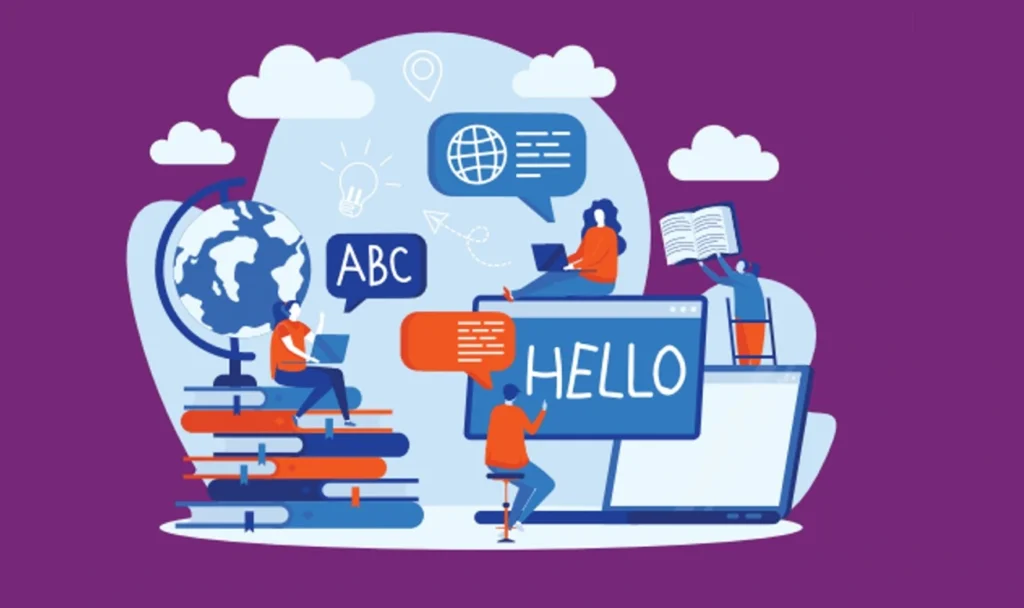
India is a land of diversity. There are over 21 Indian languages. Almost every language has its own dialect. So when we look around us, chances are that we will be able to see and hear people from very different backgrounds. While this is an extremely rewarding experience, it can be a challenge for children in school. Many states insist that children study the state language in their classroom. This is an excellent addition as learning languages not only helps deepen our connection to different cultures, but also helps increase our creative thinking ability. However, many states in India also has a lot of migrants from other states. Yet, these children will have to comply with the curriculum and study languages that aren’t native to them. Imagine if you were one of them. How hard would it be to master a local language when nobody speaks this language at home. They have to also study among students who speak the local language as their native tongue and take exams among them. The ability to put yourself in their shoes and think from their point of view is called empathy. Your project is to develop a tool that can help these children master the local language as well as native speakers. This tool can range from an app to a board game or even a program. Let’s get started
Driving Electric Vehicle Adoption
Electric Vehicles (EV) are a big positive change in the world. Our cars use up a lot of fuel and harm the environment. But we cannot stop using them. One way to help the environment and yet not change our current transportation needs is to shift from regular cars to EVs. This, as an element of transportation policy, is being considered by most of the countries in the world. The rapid growth in India’s urbanization, population and wealth over the last few decades has increased the mobility needs of its citizens by over 8 times in the last three decades. The demand for EVs in India has emerged from the contention of addressing this rising demand for automobiles while keeping a check on the environmental pollution. Despite the Government’s willingness to transform the mobility services in the country, the Indian EV industry has the lowest level of penetration rates in the world. Now imagine you are being tasked with changing this for the better. Through a series of steps you have to arrive at a plan to help increase the number of Electric Vehicles being used in India. You must consider people’s needs, environmental needs and Government policies for this project. Let’s get started.
Sports: A Part of your Community
Sports are an integral part of our growth and development. As young kids, we were asked and allowed to play. But as we grow older, for most of us sports loses its value. Mainly due to lack of time. The few who continue playing are the ones who have the potential to make sports their future. However, great things happen when we play sports. Not only does it keep our bodies agile, it also helps sharpen our mind. We think clearly and focus much better. It teaches us about teamwork and even leadership. There are many countries where people like us give a lot of importance to sports in their daily life. But our country isn’t a part of this list. What if you were tasked with bringing a change and making your community participate regularly? A change always starts with a single move in your immediate surroundings. Your opportunity to start a movement begins now. Let’s get started.
Incredible India 2022 and Beyond

India is the seventh largest country in the world. While most other countries boast of either lakes or forests, snow or mountains, desert or city, India has it all. With very diverse cultures, food, art and beautiful topography, this country is a tourist’s dream. Yet, so many places in this country remain unexplored. What if you had the power to change one such place? What if you could completely alter one location to become a tourist magnet? Let’s get started.